
On forgotten photographs, old hotel keys, handwritten postcards, and the extraordinary lives of ordinary things.
There is something wonderfully mysterious about an object that has outlived its original owner.
A brass hotel key with a faded number. A photograph of two strangers standing beside an automobile. A delicate brooch tucked into a velvet-lined box. A postcard sent from a place that no longer looks the same.
On their own, these things might seem unremarkable.
But look a little closer, and they begin to tell stories.
Not necessarily the grand stories recorded in history books. Sometimes they’re the smaller, more intimate ones: a summer vacation, an anniversary dinner, a first apartment, or a perfectly ordinary Tuesday someone happened to remember.
And perhaps those are the most interesting stories of all.
The Faces We Never Knew
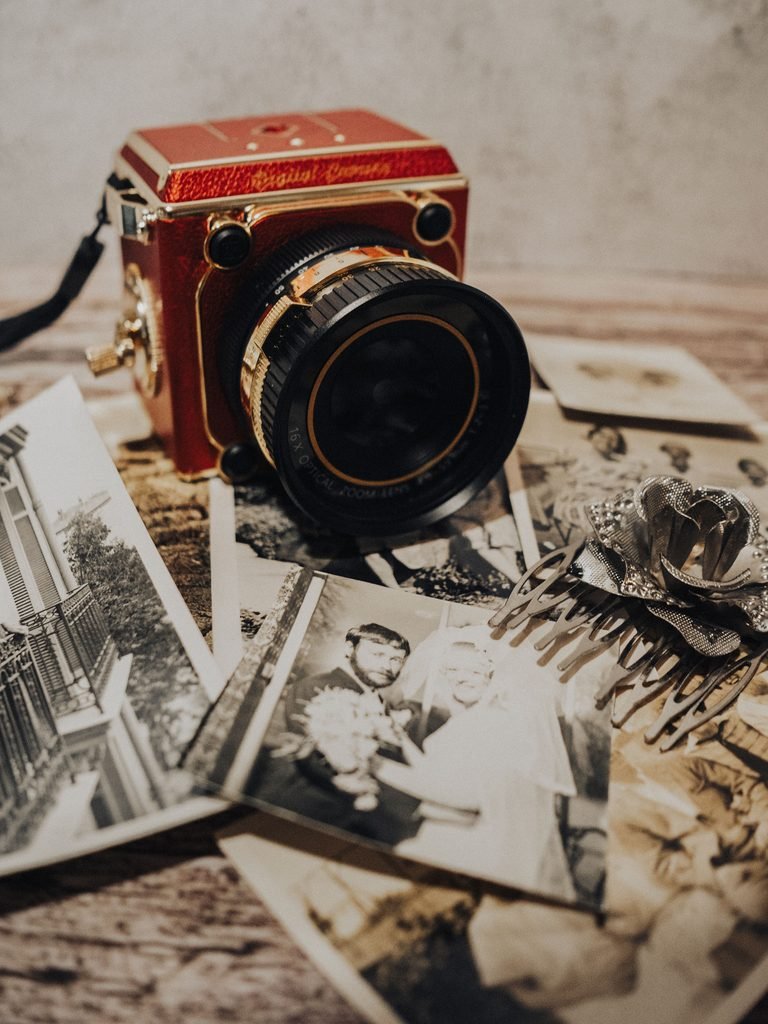
There is a peculiar sort of heartbreak in finding an old photograph with no name written on the back.
A young woman poses in an elaborate dress. Two brothers stand stiffly outside a farmhouse. A couple smiles from the running board of a car.
Who were they? Where were they going? Did they know the photograph would survive them?
During the nineteenth century, studio photographs became increasingly accessible, and formats such as cartes de visite and cabinet cards allowed people to exchange portraits, preserve family likenesses, and collect images of prominent personalities.
Cabinet cards, introduced in the 1860s, frequently featured the photographer’s name printed beneath the portrait.
Today, those studio imprints can provide valuable clues about where and when a photograph was made.
But even when the history remains elusive, there’s something extraordinary about holding the image of a person who lived an entire life we’ll probably never know.
For one brief moment, they are remembered again.
Wish You Were Here
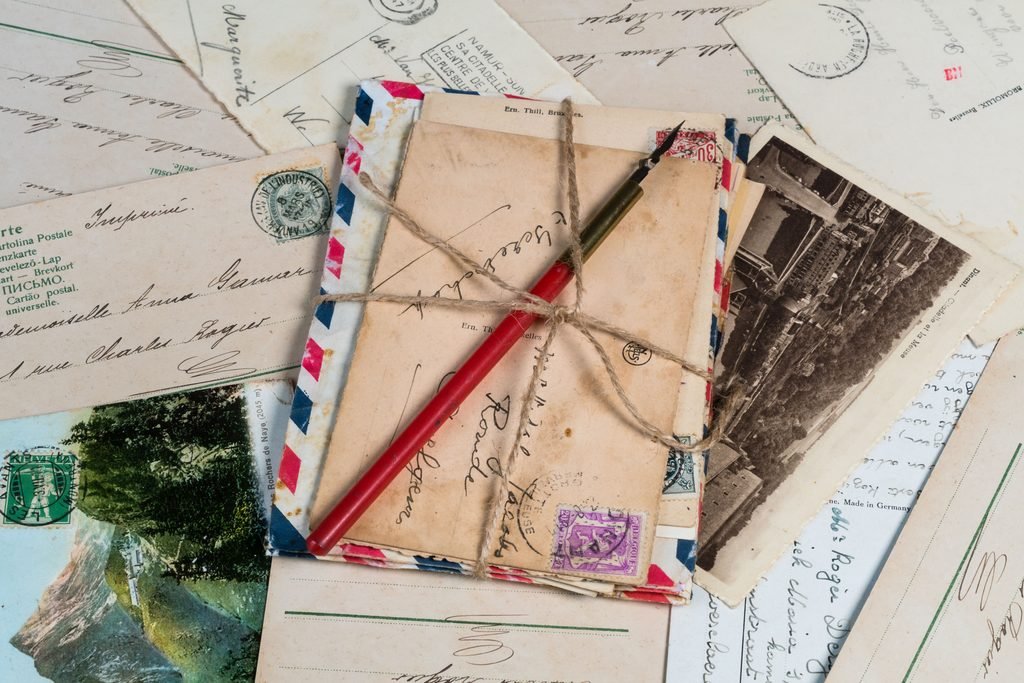
The wonderfully personal world of vintage postcards
Before vacation photographs could be shared instantly, travelers sent postcards.
A beautiful hotel overlooking the ocean. A scenic overlook. A restaurant with a neon sign promising the best pie in town.
And on the reverse, perhaps just a few hurried words:
Arrived safely. Weather is lovely. Wish you were here.
In 1907, American postal regulations began allowing correspondence on the left half of a postcard’s divided back, leaving the right half for the address.
That small change helped shape the familiar picture postcard we recognize today.
Vintage postcards preserve more than scenery. They document changing cities, vanished businesses, forgotten vacation destinations, and the way people once communicated across distances.
Sometimes the handwritten message is more compelling than the photograph itself.
A postcard might have been purchased for its beautiful view, but it’s the words written on the back that make it irreplaceable.
Room for One More Memory
The romance of an old hotel key
Imagine checking into a glamorous roadside hotel somewhere in California, circa 1958.
There’s a swimming pool edged in turquoise tile. The lobby smells faintly of fresh flowers and suntan lotion. A brass key hangs behind the front desk beneath a neat little room number.
No electronic keycard. No mobile check-in.
Just a key, a room, and the promise of somewhere new.
Old hotel keys and their numbered fobs are irresistible little souvenirs of another era.
They evoke vanished motor courts, grand railway hotels, honeymoon suites, and long-forgotten weekend escapes.
A surviving room key might tell us the name of a hotel, but the more intriguing questions have no easy answers.
Who carried it? Were they traveling for pleasure or necessity? Did they arrive excited, exhausted, or heartbroken?
A key is a practical object.
But in the imagination, it can open a thousand doors.
The Jewelry Box Never Forgets
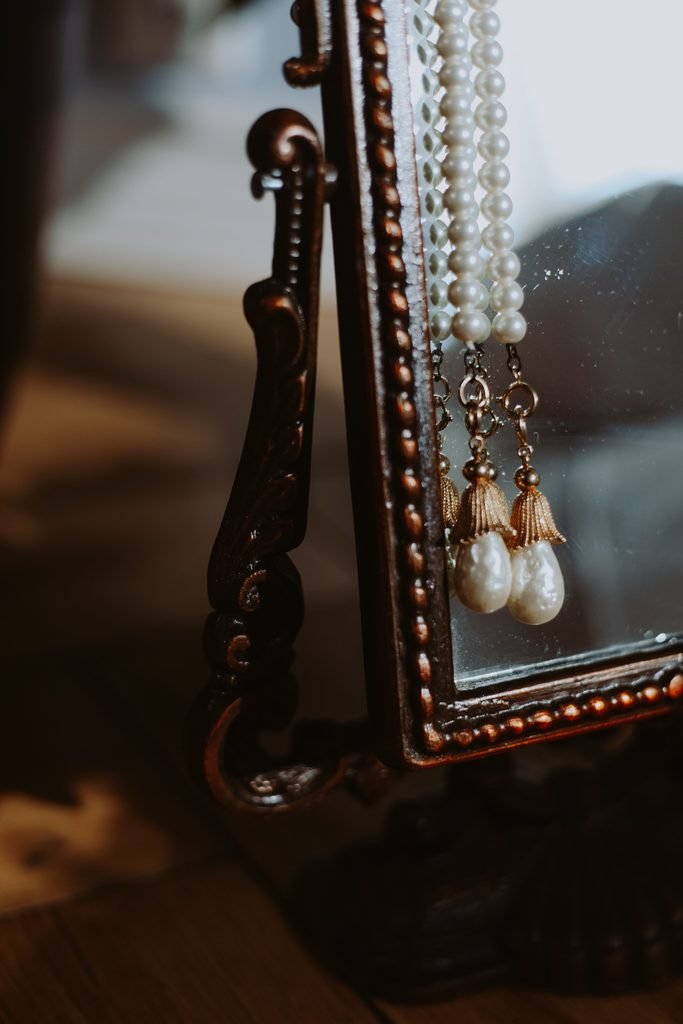
A little sparkle, a little history
A vintage jewelry box is rarely just a collection of accessories.
It’s a miniature archive of personal style.
There might be a rhinestone cocktail ring that once accompanied its owner to glamorous evenings out. A pair of clip-on earrings worn to Sunday lunch. A charm bracelet collected over years of travels, birthdays, and anniversaries.
Some pieces were expensive. Many weren’t.
But sentimental value has never depended entirely on price.
A modest costume brooch might have been someone’s favorite possession, carefully pinned onto the same wool coat every winter.
An inexpensive necklace might have been worn to a first dance.
And a scratched little bracelet might have survived precisely because someone couldn’t bear to part with it.
The most interesting jewelry isn’t always the rarest.
Sometimes it’s the piece that leaves us wondering who loved it first.
Paper Trails
The beautiful things we weren’t supposed to keep
There is an entire category of history made from things designed to be temporary.
Theater tickets. Restaurant menus. Hotel stationery. Dance cards. Handwritten receipts. Old advertisements. Matchbooks from places with names like the Stardust Lounge or the Blue Flamingo.
Ephemera, as collectors call it, was rarely created to last.
That’s part of its charm.
A ticket stub can tell us what a night out cost. A restaurant menu reveals what people ordered, what they considered fashionable, and how a business wanted to present itself.
A matchbook might preserve the name of a cocktail bar demolished decades ago.
These scraps of paper are tiny witnesses to everyday culture.
They remind us that history doesn’t exist only in museums or monumental events.
Sometimes it survives inside a forgotten desk drawer.
The Beautiful Mystery of Provenance
Collectors often use the word provenance to describe an object’s documented history of ownership.
An identified owner, an original receipt, a dated inscription, or a family photograph can transform our understanding of an otherwise ordinary possession.
But not every object comes with a paper trail.
And that raises an interesting question.
Is something less meaningful simply because we don’t know its history?
Perhaps not.
There’s value in recognizing what we can establish—and leaving room for the things we cannot.
The scratch on a watch, the faded ribbon around a bundle of letters, the handwritten initials beneath a photograph: each is a clue, not necessarily an answer.
Part of the pleasure is the investigation.
The rest is the mystery.
Tomorrow’s Antiques
Here’s a curious thought: somewhere in your home right now is an object that might fascinate someone a hundred years from today.
An old concert ticket. A family snapshot. A favorite piece of costume jewelry. A handwritten note tucked into a cookbook.
We rarely recognize our own everyday lives as history while we’re living them.
But time has a remarkable way of transforming the ordinary into the extraordinary.
The things we save—sometimes deliberately, sometimes by accident—become little messages to the future.
And the next time you discover an old photograph, a tarnished locket, or a postcard in a dusty antique-shop box, consider the possibility that you’re holding something far more interesting than a collectible.
You’re holding a small surviving piece of somebody else’s world.
And every now and then, that’s worth more than gold.
For the curious, the sentimental, and those who believe the smallest things can tell the biggest stories.
Sunshine Confidential